

Christmas is a traditional festival in western countries. Every December 25th is the birthday of Jesus Christ, the founder of Christianity. Because the Bible records that Jesus was born at night, people call the night of December 24 “Christmas Eve”.
Christmas was originally a religious holiday. In the nineteenth century, with the popularity of Christmas cards and the appearance of Santa Claus, Christmas began to gradually become popular.
Today, many countries around the world celebrate Christmas on this day, and it has entered everyone’s life. This post will tell you the stories and legends about Christmas.
Santa Claus
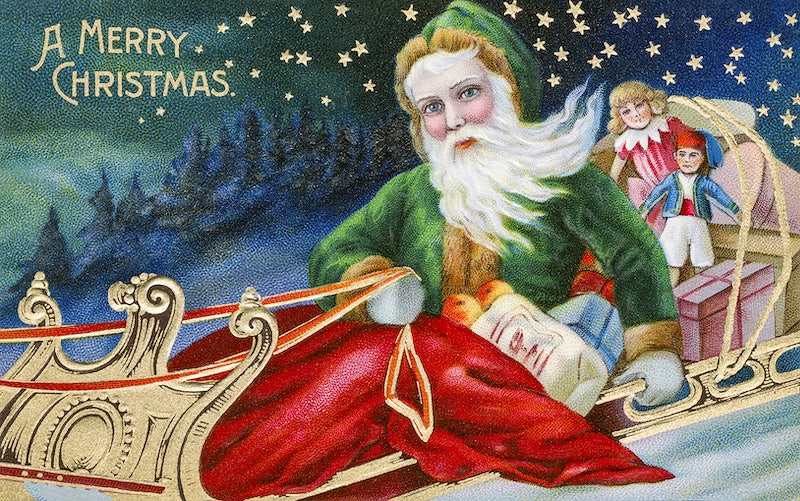
There are many legends about Santa Claus in Europe. But the most widely circulated legend is that when Christmas was just taking shape in the third century AD, there was a very rich and kind old man who often roamed around in a deer cart in the cold winter. If he encountered a poor person, the old man would be generous to help him.
One day, just before Christmas. The old man came to a city and heard that there was a poor family’s daughter who was about to get married. But she was poor and had no dowry and beautiful clothes, and the bride was very anxious about this, and her face was often sad.
The old man was very sympathetic to the girl, so in the dead of night, he quietly dropped a bag of gold coins through the girl’s window as a gift.
As the night was dark and in a hurry, the bag of gold coins landed in the stockings that the girl hung by the fireplace. The girl found gold coins when she woke up the next day and put on her socks. With the help of the old man, the girl got married decently and lively.
Not only do the old people often give gold coins to the poor, but they are also happy to send gifts such as candy and toys to children on Christmas Eve.
However, his gifts are not given openly, and he often throws them from the chimney in the dead of night, so that the children always get a surprise early Christmas morning.
Over time, people discovered that these gifts were given by a kind-hearted man with a silver beard, a red robe trimmed with white velvet, a red hat with white brims, holding a cane, and riding a sleigh.
So, people called the old man named Nicholas Santa Claus. Of course, Santa Claus doesn’t just bring gifts to the children. For the naughty children who don’t listen to advice, he not only refuses to give gifts but will raise the crutches and hit the naughty children’s ass.
Later, in order to give children a good dream and yearning, people used to clean the chimney leading to the fireplace before Christmas, and told the children to hang stockings by the fireplace before going to bed to receive gifts from Santa Claus.
Children will go to sleep obediently with eager anticipation, and wake up the next day thinking it is a gift from Santa Claus when they find their stockings full of long-awaited Christmas gifts.
Christmas Tree

It is said that a farmer received a starving child on a snowy Christmas night and let him have a sumptuous Christmas dinner. The child broke a fir branch and planted it on the ground to express his gratitude to the farmer. thanks and blessings.
After the child left, the farmer found that the branch had turned into a small tree. Only then did he realize that the one he received was an angel of God.
This story became the source of the Christmas tree. In the West, whether you are a Christian or not, a Christmas tree should be prepared for Christmas to increase the festive atmosphere.
Christmas trees are generally made of evergreen trees such as fir and cypress, which symbolize longevity. The tree is decorated with various candles, colorful flowers, toys, stars, and various Christmas gifts are hung on it. On Christmas Eve, people sing and dance around the Christmas tree and have fun.
Christmas Box

It refers to the boxing gift that Westerners give to postmen or servants at Christmas, usually in a small box.
Once upon a time, there was a kind-hearted nobleman whose wife died of illness and left him and his three daughters behind.
The nobleman tried many things but failed and ran out of money, so they had to move to a farmhouse and his daughters had to do the farm work themselves, such as cooking, sewing, and cleaning.
A few years later, as the daughters reached marriageable age, the father became even more frustrated because he had no money to buy dowry for his daughters.
One evening, the daughters hung their stockings in front of the fireplace to dry after washing their clothes.
Nicholas came to their door that night after learning of their father’s condition. From the window, he saw that the family was asleep, and he noticed the girls’ stockings.
Immediately, he took out three small packets of gold from his pocket and threw them down the chimney one by one, and just fell into the girls’ stockings. The next morning, the daughters woke up to find their stockings full of gold, enough for their dowry.
As a result, the nobleman was able to see his daughters get married and live happily ever after.
Later, children all over the world carried on the tradition of hanging Christmas stockings. Children in some countries have other similar customs, such as in France, children put their shoes on the fireplace, and so on.